Everyone has an opinion on kilts until it comes to the actual fit. Then suddenly things get quiet. Length is one of the first things a kiltmaker will bring up, and it trips up more first-time buyers than almost anything else. The good news is there is one clear answer, and it has not changed in a very long time.
The hem of the kilt goes at the center of the kneecap. That is the whole rule.
The Mid-Kneecap Rule Exists for Good Reason
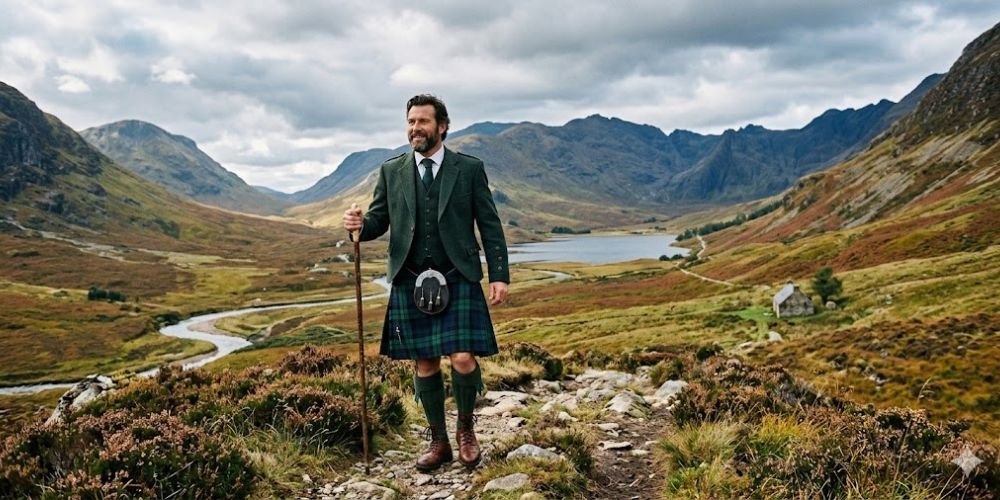
Stand up straight with feet together. The bottom edge of the kilt should land right at the middle of the kneecap. Not close to it. Not a bit above it. Right there.
This has been the standard across tartan kilts, formal Highland dress, and traditional styles for as long as kilts have been worn properly. It is not a rough guideline that bends based on preference. When that hem hits the right point, everything about how the kilt sits and moves makes sense. When it misses, something just looks off, even to people who could not tell you exactly why.
An inch too high and the kilt looks like it shrank in the wash. An inch below the knee and the whole thing loses its shape entirely.
How to Get the Measurement Right
The Natural Waist Is Not the Hip
This is where most first-time buyers go wrong. A kilt is worn at the natural waist, which is the narrowest part of the midsection, not where a typical trouser waistband sits. The natural waist is noticeably higher, sometimes by two or three full inches.
Measure from that point straight down to the center of the kneecap. For most adults, that comes out somewhere between 23 and 27 inches. Height and build will push that in either direction.
This guide on taking accurate kilt measurements covers the full process clearly and without overcomplicating it.
Always Measure While Standing
When someone sits in a kilt, the fabric lifts and shifts. That is expected and normal. But length is always confirmed while standing, not sitting.
Stand straight, feet together, and check where the hem falls. That is the only reference position that matters for a proper fit.
Does the Occasion Change Anything?
Formal Wear
For weddings, Highland games, military events, or full formal Highland dress, the mid-knee rule applies without exception. At that level, precision is part of the dress standard, and any deviation shows immediately to those who know Scottish dress well.
Kilt and Kilts carries traditional cuts made to this standard, which takes a lot of the guesswork out of buying for a formal occasion.
Casual Wear
Casual kilt wearing does carry a little more flexibility. Some wearers prefer a touch shorter in warmer months or when they want more freedom of movement. Going more than about an inch above the kneecap, though, pushes the look from traditional dress toward something more theatrical. That is fine for some, but it is a different thing entirely.
For those figuring out how to make a kilt work day to day, these tips for wearing a kilt casually cover the bigger picture well.
Three Length Mistakes Worth Knowing
Wearing it too long. The moment the hem drops below the knee, the kilt starts dragging, movement gets restricted, and the wearer looks shorter. That sharp, structured shape disappears.
Wearing it too short. Anything noticeably above the kneecap shifts the look from traditional to theatrical. There are settings where that is acceptable. Formal and semi-formal ones are not among them.
Measuring from the hip. Probably the most common mistake. The natural waist sits higher than the hip, and getting the starting point wrong means the entire measurement is off from the beginning.
The Seat Measurement Matters Just as Much
Length takes most of the attention, but the seat measurement is equally important. It controls how the pleats hang and how freely the fabric moves as the wearer walks.
Too little room at the seat and the fabric grabs and bunches at the back. Too much and the pleats spread outward awkwardly. A kilt with a good length but the wrong seat measurement will never quite sit right. Kiltmakers ask for waist, seat, and kilt length together for exactly this reason.
Body Type Changes the Numbers
Taller frames may need a small amount of extra length to keep the mid-knee proportion looking right. Shorter frames should avoid adding length to compensate, since extra fabric tends to overpower a smaller build rather than flatter it.
Stockier builds carry slightly more fabric without it looking oversized. The goal is always proportion on the specific person wearing the kilt, not just hitting a number on a tape measure.
Conclusion
The mid-kneecap standard has lasted because it is based on how the body is proportioned, not on what is trending. Get it right and a kilt looks like it was made for the person wearing it.
For those ready to find a kilt built to that measurement, the full range at mens kilts is worth a look.