
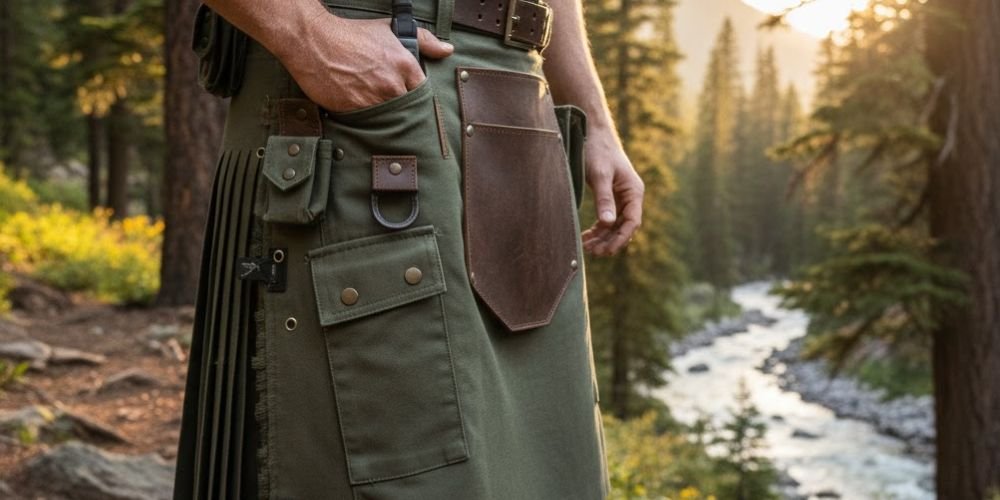
If you searched “utility kilt vs traditional kilt,” you’re in the right place. Maybe you love the idea of the tartan wrap-skirt for its cultural weight, but also want pockets, modern fabrics, and freedom of movement. That tension is exactly what this comparison explores.
By the end, you’ll understand what each style brings, how they differ, and which fits your lifestyle best. This guide is especially useful for those exploring different kilts for men. From heritage-rich styles to practical alternatives.
How Utility Kilts Differ From Traditional Kilts
Utility kilts are built from fabrics like denim, canvas or leather instead of the typical wool tartan of a Highland kilt. While traditional kilts show cultural heritage, bold tartan patterns, and historic significance.
Utility kilts emphasise practicality and functionality. For example, you’ll often find deep pockets, belt loops and reinforced stitching in a utility kilt, whereas a traditional kilt from Scotland generally lacks pockets and uses cloth wraps and buckles of old.
The closure methods differ too. Utility kilts might use leather straps or buckles, while traditional ones rely on cloth wraps and pleats set around the waist. The result: Utility kilts give you movement and utility, traditional kilts give you ceremony and history.
Many modern wearers choose utility kilts for festivals because pockets free up their hands. That is something traditional tartan kilts never offered.
Key Features of Utility Kilts
If you want a kilt you live in rather than reserve for formal nights, a utility kilt offers features that align with modern, active lifestyles.
Common Utility Kilt Advantages
- Lightweight, breathable fabrics
- Multiple deep pockets
- Reinforced stitching for durability
- Easy maintenance and lower cost
- Suitable for casual or active wear
Traditional Kilts’ Cultural and Formal Appeal
Traditional kilts are crafted with thick wool tartan, often hand-stitched, deeply pleated and deeply symbolic of Scottish heritage and clan identity. They’re usually worn on formal occasions such as weddings, ceremonies or Highland games.
Because they are made from heavy wool, they carry a weight of craftsmanship and tradition. Kilts have a long history from traditional Scottish tartans to modern utility kilts with a rugged, functional appeal.
Care is more demanding: they often require dry cleaning, careful storage and cost more. If you want elegance, authenticity and heritage worn proudly, a traditional wool kilt delivers in a way few modern garbs can.
Pros and Cons of Utility Kilts
Utility kilts bring some strong pros: they’re lightweight, comfortable, practical (pockets!), affordable and versatile for casual and active use. They allow freedom of movement for manual work. Or outdoor activity.
Modern kilt styles include leather, camouflage, tactical designs appealing to diverse users.
Pros and Cons of Traditional Kilts
Traditional kilts have tons of benefits. They have rich cultural symbolism, an elegant appearance, durable wool fabric and perfect suitability for formal wear or heritage occasions. The craftsmanship is often premium and the look unmistakably kilt.
But they carry cons too. They have heavier weight, are less breathable especially in warm climates, have higher cost, no pockets and higher maintenance.
Choose the Kilt Style That Suits Your Lifestyle
If you’re dressing for cultural respect, ceremonies, or going to attend formal events. Go with a traditional kit.
But if you are looking for comfort, pockets and for daily or casual wear, opt for a utility kilt.
Consider climate: wool is excellent for cooler weather but might be heavy or hot in warm zones; cotton or synthetic fabrics feel better in everyday use or warm weather.
Conclusion
Choosing between a utility kilt and a traditional kilt is really choosing between function and heritage. Comfort and ceremony. Casual or formal.
If you’re more towards activity and modern style, the utility kilt may be your best fit. If you value tradition, cultural identity and elegance, the traditional kilt delivers a timeless look and feel. Especially when opting for authentic mens tartan kilts that reflect your heritage and pride.