
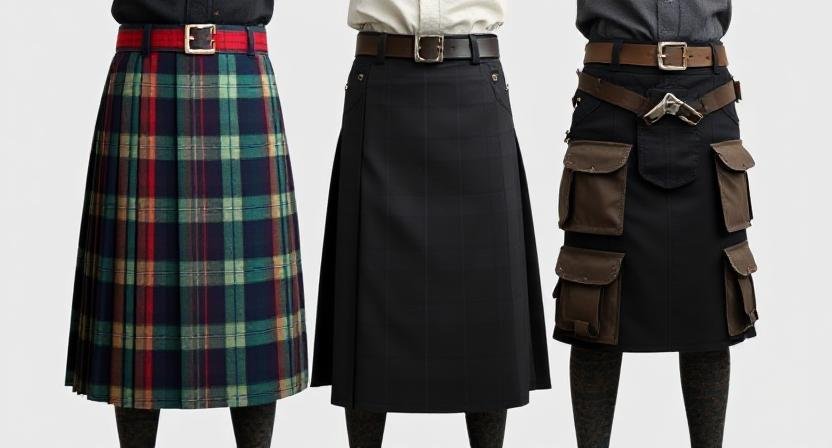
The look of kilts today are rooted in Scotland’s past, but evolving for global, everyday life. The kilt began as a symbol of clan and country, and now it’s also a piece of street‑style, outdoor gear, and fashion. In this article we’ll dive into the key differences between traditional kilts and modern kilts vs traditional kilts, exploring what changed. And what stayed the same. Whether you’re attending a formal event or planning a casual adventure, you’ll learn how to choose the right Kilts For Men that suit your lifestyle and setting.
The Origin and Evolution of Kilts
The story of the kilt starts in the Scottish Highlands in the 16th century with the great kilt, known as the Feileadh Mòr, a full‑length wrap that could double as a cloak. Over time, that evolved into the tailored small kilt, the Feileadh Beag, which sat at the knee and became associated with Highland identity. The kilt then transformed into a national symbol that is worn for ceremonies, military uniforms and cultural pride. From its early functional roots to formal use. The kilts made today are designed for casual wear, fashion, or utility. Yet the history still matters. That history is also stitched into the variety of Tartan Patterns that continue to reflect heritage and family ties today.
What Defines a Traditional Kilt
A true traditional kilt is woven from heavy wool tartan and are often associated with a clan or region. The weight of the fabric, often 13‑16 oz or more, gives structure and durability. The pleats are hand‑sewn and follow classic craftsmanship techniques. There’s no zipper or hidden pockets; instead you’ll pair it with a sporran, kilt pin, belt, and jacket. Traditional kilts are reserved for formal and cultural events like weddings, Highland games, or formal dinners.
The Rise of the Modern Kilt
In the late 20th and early 21st century a new wave arrived: the modern kilt. These kilts embraced fabrics like cotton, denim, leather or synthetic blends to suit everyday wear. Influenced by fashion trends and global street style, and embraced by people outside Scotland, modern kilts are less about ceremony, more about lifestyle. They might include cargo pockets, zippers, adjustable waists or tool loops. And features unheard of in traditional kilts. This shift reflects a broader question in the kilt‑world: “Can I honour tradition and still wear this kilt on a hike, at a festival, or around town?” The answer increasingly is yes, which makes them appealing for anyone who values heritage and function.
Key Differences Between Modern and Traditional Kilts
Here are some of the main differences between traditional vs modern kilts.
1. Fabric and Materials
When comparing modern kilts vs traditional kilts, one of the clearest differences is in textile. Traditional kilts use pure wool tartan, heavy and textured. Modern kilts often use lighter, synthetic, cotton or denim fabrics for comfort and flexibility. The impact: modern materials make the kilt easier to wear daily, easier to clean, and less formal but they also change the look and feel of the garment. So if you’re choosing a kilt for full heritage fidelity, wool is the gold standard; if you’re choosing for practicality, modern fabrics win.
2. Design and Structure
In a traditional kilt you’ll find the classic pleated structure, often with knife or box pleats designed to showcase tartan. Modern kilts may reduce the pleats, simplify the design or add utility features like pockets and zippers. In that sense the silhouette can shift: from formal wrap to functional skirt‑style garment. The trade‑off: the more utility features you add, the farther you move from classic styling. But the closer you come to everyday usability. Some Mens Tartan Kilts now bridge both worlds. Offering traditional aesthetics with functional updates.
3. Purpose and Usage
Traditional kilts are often reserved for ceremonies, formal events, or Highland games. They carry ritual, symbolism and weight (literally). Modern kilts are built for casual wear, workwear, festivals, outdoor adventures. People who wear them daily talk about freedom and flexibility. According to a reddit user: “Comfort plus pockets can’t be beat!”So your choice depends on your purpose: formal reverence or everyday expression.
Conclusion
The journey from traditional to modern kilts is more than a change of fabric. The journey is about a transformation in purpose, style, and identity. Kilt and Kilts celebrates this evolution honoring deep Scottish heritage while embracing modern practicality. Traditional kilts carry timeless pride, while modern designs suit everyday life, blending comfort with personal expression. Whether you lean toward heritage or versatility, choose your kilt with pride and authenticity. Wear it boldly. Know your story. Embrace the kilt that fits your life.