
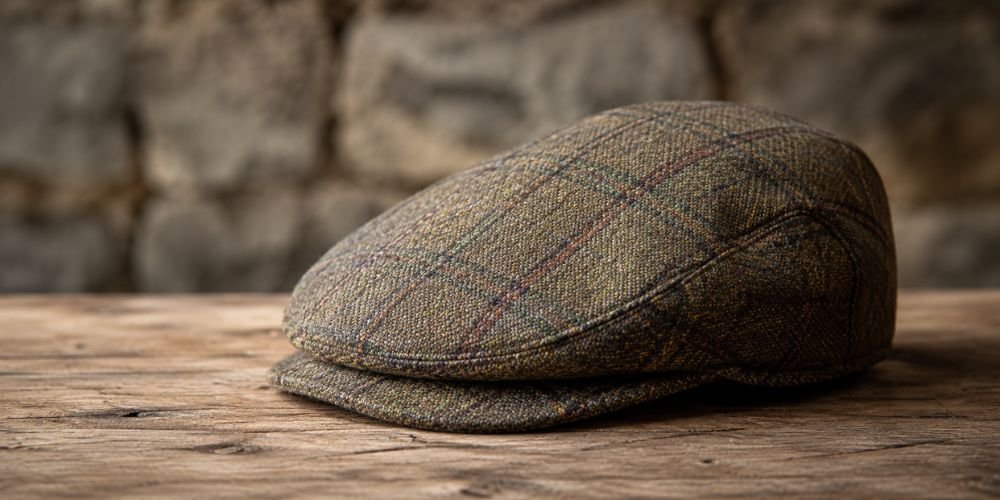
Flat caps have always had a quiet kind of swagger. They do not beg for attention. They sit low, frame the face and make an outfit look considered without feeling dressed up. That may be why the cap has survived so many shifts in menswear. It feels old, but never stuck.
For anyone who enjoys Celtic dress, the connection is easy to see. Kilt and Kilts carries that same mix of heritage, cloth, attitude and everyday wearability. A flat cap beside a kilt does not feel like a costume. It feels like a man who knows what he is wearing.
A Cap Built From Real Life
The flat cap did not begin as fashion. Its early story belongs to working people, cold weather and hard wearing cloth. The style is commonly traced to Northern England, while Scotland kept the older word bunnet and Ireland often knew it as the paddy cap. Most versions were made from wool, tweed, cotton, linen, corduroy or leather because those fabrics could take daily use.
There is also a strange legal chapter behind it. In 1571, English law required many males over six to wear wool caps on Sundays and holy days, mainly to support the wool trade. The law was later repealed, but the habit had already settled into public life.
Scotland Gave It Grit
In Scotland, the flat cap lived close to land, work and weather. It was not precious. It could be worn with rough coats, boots, wool jumpers and tweed jackets. The Scottish bunnet had that same unshowy confidence seen in Highland clothing.
That is why it still sits naturally with tartan. A man wearing a kilt already understands texture. Pleats, checks, leather straps, wool socks and sporrans all carry visual weight. The cap adds shape without stealing the outfit.
From Highland Wear to Street Style
Modern Scottish style is not trapped inside formal dress. The old rules still matter for weddings, ceremonies and pipe bands, but everyday kilt styling has opened up. A flat cap can lean traditional with tartan and brogues. It can also feel sharper with denim, boots or a utility kilt.
That shift mirrors the wider story of kilts. The article on modern and traditional kilts shows how heritage pieces can change shape without losing their roots.
Ireland Made It Personal
Ireland gave the flat cap a softer emotional pull. It became part of rural memory. Grandfathers wore it. Farmers wore it. Men leaving home wore it in family photographs. Across Irish communities abroad, the cap became a small sign of belonging.
It was never only about looking polished. It carried familiarity. A wool cap could remind someone of rain on stone walls, a field gate, a music session or a father heading out before breakfast. Clothing like that does not disappear quickly.
Why The Cap Went Global?
By the nineteenth and early twentieth centuries, flat caps were common across Great Britain and Ireland. They moved through factories, farms, schoolyards, golf courses and country estates. Better cloth versions were later adopted by wealthier men for shooting, motoring and leisure.
That range gave the flat cap its staying power. It could belong to a worker on Monday and a gentleman on Saturday. It could sit with a coat in winter or a linen shirt in spring. Few accessories move that easily.
Why Does It Still Work With Kilts?
The flat cap works with kilts because both pieces carry history without needing to shout about it. A tartan kilt with a plain cap feels grounded. A dark cap with a black utility kilt feels tougher. A tweed cap with a sporran and jacket feels ready for a Highland gathering without looking stiff.
The wider kilt world has also grown beyond one country or one occasion. Readers curious about that reach can explore which countries wear kilts and see how identity, fabric and dress keep crossing borders.
Final Wrap-Up
The flat cap has crossed class lines, country borders and fashion eras because it never lost its purpose. It began as practical headwear, became part of Scottish and Irish identity and found a second life in modern menswear.
That is also why it pairs so well with kilts. Both feel rooted but wearable. Both carry heritage without needing a history lesson on the street. For men building a look with real character, Men’s Kilts keep that same spirit alive. Practical, sharp and still full of old soul.