
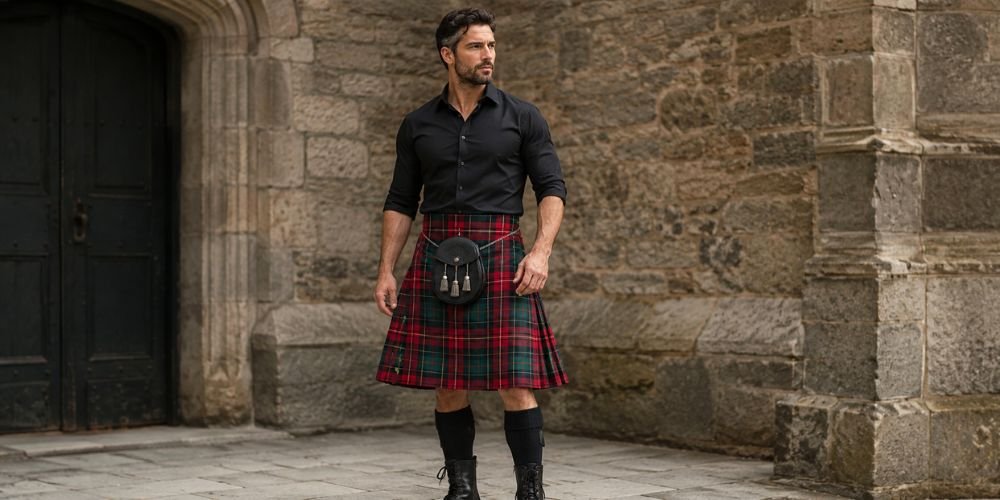
Some fabrics look nice. Tartan feels personal.
It has lines, color and order, of course. But it also carries something harder to explain. A family name. A place. A wedding memory. A grandfather’s old photograph. A pipe band walking through a cold street. That is why a Tartan Plaid Pattern rarely feels like a plain fashion print. It has weight.
For anyone exploring Highland wear through Kilt and Kilts, tartan is usually the first detail that pulls the eye in. The pleats matter. The jacket matters too. Still, the tartan often does the talking before anything else.
What Tartan Really Means
Tartan is a repeated pattern made from vertical and horizontal bands. The repeat is called a sett. That sett controls the order of the colors, the width of the lines and the rhythm of the cloth.
Plaid is often used as a casual word for checked fabric. Tartan is more specific. It usually points to a pattern with identity behind it, such as a clan, region, family, military group or modern registered design.
That difference matters. A plaid shirt may simply look stylish. A tartan kilt can feel inherited, chosen or claimed.
Why Patterns Carry History
Tartan became strongly tied to Scotland through Highland dress and clan culture. Over time, certain patterns became linked with family names, districts and public groups. Some were worn proudly at gatherings. Some became part of formal dress. Some survived because people kept choosing them.
Not every wearer chooses tartan for ancestry though. That is part of its beauty.
One man may pick a tartan because it carries his surname. Another may choose it because the colors suit his skin tone or wedding outfit. Someone else may simply like the mood of it. None of those choices feel wrong. Tartan has always held space for history and personal taste.
Main Tartan Plaid Pattern Types
Tartan types can confuse first time buyers because the same pattern may appear in several color styles. The bones stay the same. The feeling changes.
Modern Tartans
Modern tartans usually look deeper and sharper. The blues feel darker. Greens look richer. Reds can carry a stronger formal punch.
These tartans work well for weddings, evening wear and polished Highland outfits. They photograph well and suit men who want the kilt to feel bold without becoming too loud.
Modern does not always mean newly created. It often means the colors have stronger saturation.
Ancient Tartans
Ancient tartans feel softer. Their colors often look lighter, almost sun faded. Green may become gentler. Red may turn warmer. Blue may feel less formal.
The word Ancient can sound like the tartan itself is older, but it usually describes the color effect. The result has an easy charm. Less sharp. More worn in.
For anyone comparing older Highland styling with current kilt fashion, the guide on modern and traditional kilts gives useful context without making the subject feel heavy.
Weathered Tartans
Weathered tartans are quiet in the best way. They bring to mind stone walls, damp hills, old boots and cloudy walks through rough ground.
The colors often lean toward brown, grey, moss green and softened blue. They suit men who want heritage without brightness. A weathered tartan rarely shouts. It settles into the outfit.
Hunting Tartans
Hunting tartans often use darker greens, browns, blues and blacks. The feeling is practical, outdoorsy and strong.
They pair well with leather boots, plain shirts, wool jackets and simple accessories. A hunting tartan can make a kilt look rugged without looking unfinished.
Dress Tartans
Dress tartans are brighter and often use white. They feel lighter, more ceremonial and easier to notice.
These patterns are common in dancing and formal events, but they can also work for men who want something with energy. They are not shy patterns. They are not meant to be.
How Colors Shape the Mood
Color changes everything.
Red can feel proud. Green feels grounded. Blue brings calm. Black adds formality. Brown and grey make a tartan feel older, quieter and closer to the land.
Still, colors do not carry one fixed meaning in every pattern. A red tartan can feel romantic in one design and military in another. A green tartan can feel rural, formal or clan driven depending on the sett.
That is why choosing tartan is not only about liking a color. It is about how the whole pattern feels once worn.
Tartan Beyond One Country
Tartan is deeply Scottish, but it is no longer only Scottish. Irish, Welsh, Canadian and American tartans show how the pattern travelled with people, migration, family pride and ceremony.
The wider reach of kilt culture becomes clearer in this piece on countries wearing kilts. It shows how tartan became part of identity in more places than many people expect.
The Conclusion
A Tartan Plaid Pattern is not just decoration. It can feel bold, quiet, formal, rugged or deeply personal depending on the colors and sett. Modern, Ancient, Weathered, Hunting and Dress tartans each bring their own character.
The right one should feel natural on the wearer. Not forced. Not random. Just right.
For men who want cloth with presence, heritage and real character, Men’s Tartan Kilts keep that story wearable. Strong patterns. Honest roots. A look that still feels alive.