
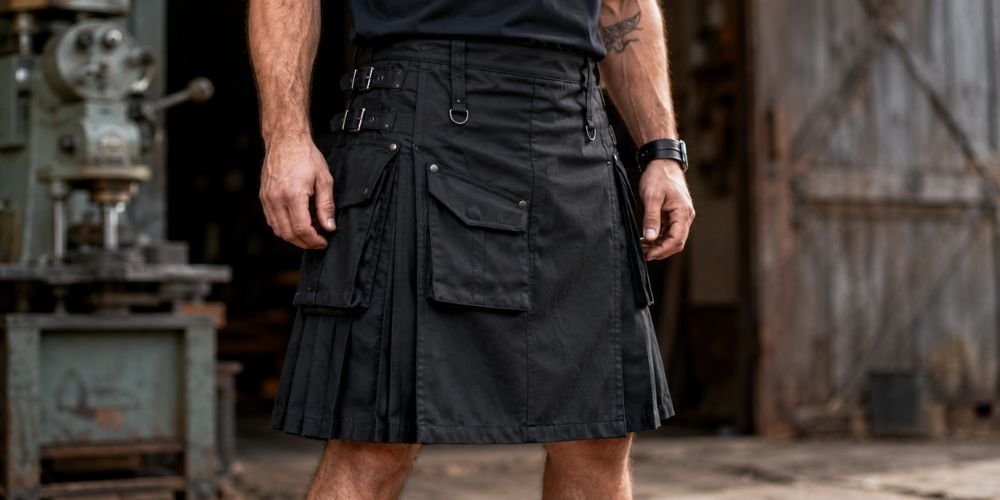
A utility kilt usually earns its wash. It gets worn on long days, outdoor events, warm afternoons, busy gatherings and the odd muddy walk back home. Dust settles near the hem. Pockets pick up small marks. A stain may show up later when the fabric dries.
A tough kilt still needs a careful wash. The cloth can take the day, but pleats can slump, pockets can pull and straps can twist if it is treated too roughly. Kilt and Kilts makes utility kilts for regular wear, so the aim is simple: get the dirt out and keep the shape in.
Check the Label Before Anything
The care label is not exciting, but it matters. One utility kilt may be cotton. Another may be denim. Some have heavier snaps. Some have decorative straps or darker dyes that need a softer wash.
A quick look at the label can stop a lot of regret. Shrinking, fading and twisted trims usually happen when people treat every kilt the same.
Cold water is the safer starting point for most utility kilts. It helps protect the color and keeps the fabric from taking too much stress. A gentle wash is usually enough. Dirt needs to come out. The kilt does not need to be thrown around like a shop rag.
Empty Every Pocket Properly
This step sounds too simple to mention until a coin scratches a button or a forgotten receipt turns into paper dust across the whole wash.
Utility kilts have pockets for a reason. They carry keys, wallets, tickets, small tools and all the random bits that collect during a day out. Before washing, every pocket should be checked by hand. Not just patted from the outside. Actually checked.
The kilt should also be shaken out. Dried mud or grass can be brushed away before it goes near water. Snaps and buttons should be closed. Loose chains, pins or clip-on pieces should be removed.
Turning the kilt inside out helps too. It protects the outside fabric from rubbing inside the machine and keeps the visible surface looking cleaner for longer.
Handle Stains Before the Machine
A stain should be dealt with before the wash starts. Once it goes through a full cycle, it can settle deeper into the fabric.
For most small marks, cool water and mild liquid detergent are enough. The fabric should be dabbed gently. Hard scrubbing can leave one pale, rough-looking spot that stands out more than the stain did.
Mud is different. Let it dry first. Brush off what comes away easily, then wash the kilt. Wet mud spreads fast and makes more work.
Grease needs a little time. Put a small amount of mild detergent on the spot. Let it sit for a few minutes. Then wash as normal. Bleach should stay away unless the label clearly allows it. On colored kilts, bleach can leave damage that no second wash will fix.
Keep the Wash Calm
Now, the washer should not be stuffed full. A crowded drum twists the kilt and can leave the pleats sitting badly. If the kilt has heavy buckles or snaps, washing it alone is often the better choice. It gives the fabric room and keeps the hardware from knocking against other clothes.
A low or medium spin is safer than a hard one. The kilt should come out clean, not crushed.
Skip the Dryer When Possible
A dryer feels convenient, but heat is where utility kilts can lose their shape. Fabric may shrink. Pleats may soften. Wrinkles can become harder to fix.
Air drying is slower, but kinder. After washing, the kilt should be shaken out and shaped by hand. Hang it from the waistband in a place where air can move around it.
Strong sun is not always helpful. Dark colors can fade if they sit too long in harsh light. A shaded spot is usually better.
If the fabric needs ironing, the label should be checked first. The iron should avoid snaps, buttons and metal parts. A light press on flat areas is usually enough.
Do Not Wash It After Every Wear
A utility kilt does not need a full wash every time it comes off. If it was worn for a short clean outing, airing it out may be enough.
A proper wash makes sense after sweat, mud, spills, travel or long outdoor wear. The aim is balance. Too much washing can age the fabric early. Too little care lets dirt sit in the fibers and dull the finish.
Conclusion
The cleanest answer to how to wash a utility kilt is simple. Check the label. Empty the pockets. Treat stains early. Wash cold. Use a gentle cycle. Let it air dry.
Those small habits help the kilt keep its color, structure and easy rugged look. For wearers who want practical styles made for movement, the men’s utility kilts collection offers everyday options that stay easier to maintain when washed with care.