
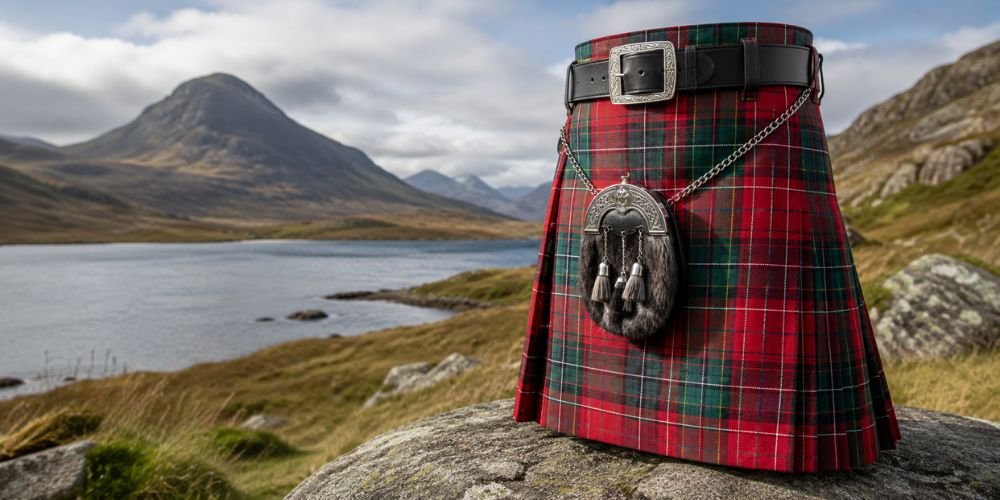
A kilt looks simple when it is finished. Flat front, neat pleats at the back, clean swing when the wearer walks. The fabric behind that shape is where people usually get confused. One person hears 8 yards. Another sees 5 yards. Someone else is told it depends on fabric width.
That last answer is the honest one. The amount of tartan depends on the kilt style, the wearer’s measurements, the pleating style and the fabric width. Still, most adult kilts fall into a clear range. A traditional kilt needs around 8 yards. A lighter casual kilt often uses around 5 yards. For anyone starting the process, Kilt and Kilts gives a useful place to look at kilt styles before guessing fabric amounts.
What Is the Usual Tartan Amount?
For a classic men’s kilt, 8 yards is the number most people hear first. A full kilt needs enough tartan for the front aprons, the overlap, the seat, the hip shape and the pleats. Most of the cloth does not sit in the front. It is folded into the back.
That extra cloth is what gives the kilt its weight. It helps the pleats sit properly. It also gives the garment that firm, traditional feel people expect at weddings, formal events and Highland gatherings.
A 5 yard kilt is different. It still has the shape people expect, but it feels lighter. The pleats are not as deep. The swing is softer. It can work well for casual use, summer events or regular wear where comfort matters more than fullness.
Why Does Width Change the Answer?
Tartan is not always woven at the same width. Some cloth is single width. Some is double width. A wider cloth gives the maker more usable fabric across the roll, so the yardage can read differently.
That is why copying one fabric number from another kilt can cause trouble. Two kilts may both be called traditional, but the fabric width may not be the same. The sett size can also change things. A large tartan pattern may need more care during cutting so the lines sit properly across the apron and pleats.
Do Measurements Matter?
Yes. Waist size matters more than many buyers expect. A kilt wraps around the body, then overlaps at the front. After that, the back still needs enough cloth for pleats. If the waist is larger, the maker may need more tartan to keep the same fullness.
Length matters too, though less than waist and hip size. A taller wearer may need a longer drop from waist to knee. That extra length has to be planned before the cloth is cut.
A buyer should have the natural waist, hip measurement, kilt length, preferred rise and intended use ready before ordering. Those simple details help avoid a kilt that feels tight, short, thin at the back or awkward around the apron.
What Do Pleats Do?
Pleats are the reason kilts need so much tartan. Without them, the garment would lose its movement and proper back shape. With them, the kilt has weight, structure and that familiar swing.
There are two common choices. A kilt can be pleated to the sett, where the tartan pattern continues across the pleats. It can also be pleated to the stripe, where one strong line becomes the focus at the back.
Neither option is wrong. The choice changes the look. It can also change how carefully the cloth must be matched. That is why the tartan amount should be discussed before ordering fabric.
Is 5 Yards Enough?
For casual wear, often yes. A 5 yard kilt can be comfortable, lighter and easier to wear for long days. It is a practical choice for festivals, gatherings or simple everyday outfits.
For weddings, formal Highland dress or a more traditional finish, 8 yards is better. It gives the kilt more presence. It also gives the maker more room to shape the pleats.
Conclusion
The best answer to how much tartan to make a kilt is not one fixed number. Most traditional adult kilts need around 8 yards. Many casual kilts can be made with around 5 yards. The final choice depends on fabric width, body size, sett size, pleating and the finish the wearer wants.
For a classic finished option, the men’s tartan kilts collection can help buyers compare the look before deciding. The right amount of tartan should make the kilt feel balanced, not thin, bulky or poorly matched.