
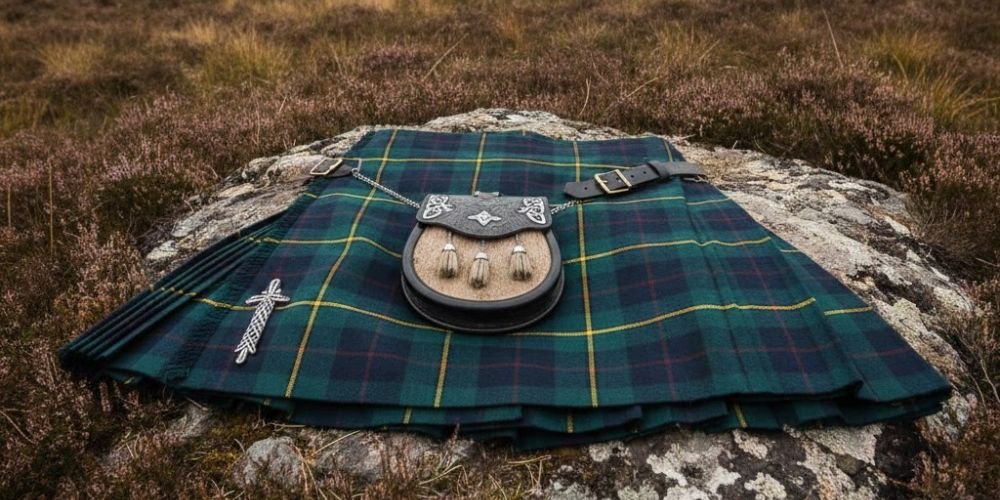
“I want a real kilt, not a costume.” That’s what Alex, groom-to-be from the U.S., typed into forums and search bars when planning his Scottish wedding look. But the more he searched, the more confusing it got. One site said kilts were ancient. Another claimed an Englishman invented them. Some forums mocked modern kilts as cosplay. For buyers like Alex heritage-curious, detail-driven, and proud to wear it right. The noise feels overwhelming.
Here’s the truth: kilts didn’t begin in one moment. They evolved over centuries. From Iron Age wool trousers to the sophisticated 8-yard kilts we wear today, the journey blends practicality, politics, and personal pride. Whether you’re shopping for kilts for men or just exploring your roots, understanding the history behind the fabric matters. Let’s dive in.
Ancient Origins: Pre-Kilt Garments in Scotland
Long before anyone pleated tartan by hand, Scotland’s early people dressed for survival. Around 500 BC, the Iron Age Celts wore braccae with thick wool trousers belted at the waist. They weren’t fashionable but they worked. These trousers helped people traverse wet peat bogs. And windswept ridges with protection and flexibility. Over time the climate and culture shaped more practical wool garments such as tunics and mantles.
By the 3rd–4th centuries AD, archaeologists uncovered the Falkirk check, a peat-preserved woven cloth with simple check patterns made from undyed wool and natural dyes (Smithsonian). While not clan-specific, it proves that patterned wool which is arguably the ancestor of today’s men’s tartan kilts was already in use, reflecting both environment and resourcefulness.
How Celtic Dress Evolved into Early Scottish Wraps
As Scotland’s terrain dictated clothing, wool became king. Highlanders moved away from tight garments and instead favored large woolen wraps that could double as blankets, cloaks, and even bedding. These wraps were practical for herding, raiding, or navigating unpredictable Highland weather. They weren’t sewn. They weren’t sized. They were wrapped and belted by instinct and experience.
Tartans at this point weren’t clan-based but regional. Dyes from plants like woad, alder, and heather created earthy reds, greens, and blues. These colors reflected where someone lived more than who they descended from (Scottish Tartans Museum). And unlike breeches worn in Lowland cities, these Highland wraps allowed quick movement, vital for rough terrain and unpredictable storms.
The Great Kilt: Birth of the Féileadh Mòr (16th Century)
By the late 1500s, the féileadh mòr, or “great kilt,” became standard Highland wear. Also called the belted plaid, this 4 to 6-yard piece of wool served two roles: lower half for warmth and movement, upper half as a cloak against rain and wind. It was gathered into pleats by hand, belted at the waist, and thrown over the shoulder or wrapped around the body.
Its beauty was in its utility. No tailoring. No measuring. Just instinct and speed. In rough Highland life whether farming, fighting, or traveling. It transformed with the wearer. It repelled moisture thanks to the wool’s natural lanolin. And in sudden weather, it could be adjusted mid-journey.
What makes it legendary isn’t just how it looked, but what it allowed people to do: adapt fast and stay warm in some of the most unforgiving weather in Europe (Met Museum).
The Small Kilt: Modern Form Emerges (18th Century)
Fast-forward to the early 1700s. An English Quaker named Thomas Rawlinson reportedly shortened the great kilt while managing an ironworks near Inverness. Why? Factory workers couldn’t function efficiently with bulky upper wraps flapping around hot machinery. So Rawlinson cut off the top half, stitched permanent pleats into the back, and created what we now call the small kilt or feileadh beag (Wikipedia).
This version offered mobility without losing cultural connection. Soldiers in Highland regiments soon adopted it. Civilians followed. The tailored small kilt spread quickly because it was easier to make, wear, and mass-produce. It marked a turning point: the kilt was no longer just Highland gear. It was evolving into a national garment.
Still, wearing tartan was banned after the 1746 Jacobite rising, under the Dress Act, until 1782. Ironically this attempt to erase Highland identity only deepened its emotional value.
Modern Kilts: From Tradition to Global Fashion
Today, kilts exist in dozens of forms, but the 8-yard wool kilt remains the standard for weddings and formal events. Brands like Kilt and Kilts blend that heritage with options like utility kilts, hybrid casual styles, and lightweight builds for everyday wear.
The modern wearer whether a Black Watch re-enactor, a groom, or a dancer is part of an evolving story. Contemporary kiltmakers preserve traditional techniques like pleating to the sett, hand-stitched fell lines, and authentic fabric weights (Clan.com). Machine weaving has made production faster, but heritage craftsmanship hasn’t disappeared.