
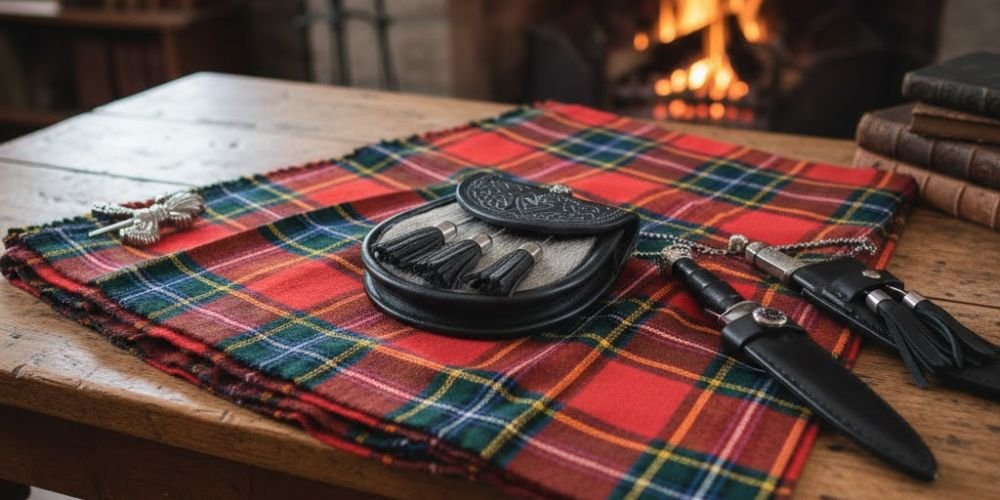
Kilts are worn across the borders. From Irish regiments in saffron yellow to modern Maori-Scottish fusion kilts in New Zealand. This iconic piece of tartan patterned garment has become a symbol of pride and heritage worldwide.
That’s why Kilt and Kilts offers kilts beyond Scotland. Our collection includes Irish, Welsh, and international styles all verified and custom-fitted to honor the real history, not just trends.
In this guide, you’ll explore the countries where kilts are worn, how styles evolved, and which tartan fits your story.
Scotland: The Traditional Kilt Heartland
Kilts began in the Scottish Highlands in the 16th century as long belted plaids, or feileadh mòr, used for warmth and mobility in rugged landscapes. By the 1730s, they were shortened into what we now recognize as the modern kilt.
Tartans like MacLeod or Black Watch aren’t just colors. They represent family lines, regiments, and regions. Wearing the correct one matters especially at weddings, ceilidhs, or Highland Games. That’s why we carry official Scottish tartans that meet standards used by regimental bands and clan associations worldwide.
Ireland: Saffron Kilts and Gaelic Pride
Irish kilts tell a different story. While not ancient in design, saffron kilts became popular in the late 19th century during Ireland’s Gaelic revival. These mustard-colored garments weren’t Scottish tartans. They were a symbol of resistance, pride, and Catholic identity.
Irish regiments in the British Army wore them. So do modern pipe bands and couples during Irish weddings today.
You’ll also find county tartans representing places like Donegal or Clare. While some see these as “modern inventions,” they’ve been embraced by Irish diaspora communities in the U.S. and Canada.
Our collection includes saffron and county kilts with tailored pleats and accurate patterns. Because authenticity matters when you’re representing roots.
Wales: Cilts and Modern Celtic Style
Unlike Scotland and Ireland, Wales has no ancient kilt record. But that hasn’t stopped modern Welsh from embracing them. They have come up with the “cilt” a Welsh spelling of “kilt” that uses red and green tartans symbolizing the landscape and dragon flag.
Worn on St. David’s Day, at Welsh weddings, and by musicians, Welsh cilts are more than just aesthetic. They’re a declaration of belonging in the Celtic family.
Some critics call them “marketing gimmicks,” but for wearers, it’s about cultural expression.
Canada and the USA: Diaspora Kilts and New Traditions
In places like Nova Scotia and Cape Breton, kilts are as common at weddings as they are in parades. Many families wear clan tartans passed down through generations.
Canadian regiments still issue kilts to honor Highland battalions. Meanwhile, in the U.S., pipe bands and St. Andrew’s Societies make kilts essential for formal events.
Americans sometimes get flak online for wearing kilts. But as many diaspora families say, “I wear mine because I’m proud of my roots.”
Galicia and Austria: Lesser-Known Celtic Kilt Adopters
Spain’s Galicia region has Celtic roots often overlooked. During local festivals, men wear kilts in tartans like the “Gallaecia National.” Though modern in pattern, they honor ancient tribal links.
Austrian Carinthia, with its Alpine-Celtic ancestry, features kilt-like folk attire in traditional dances. While not strictly kilts, these garments show the global echo of Celtic identity.
We carry select Galician tartans and European hybrid kilts that are perfect for travelers, reenactors, or heritage event hosts looking for global authenticity.
New Zealand and Beyond: Kilts with a Modern Twist
In New Zealand, cultural fusion leads the way. Maori-Scottish families often wear hybrid kilts at events. Combining clan symbols with tribal patterns.
Modern utility kilts are also gaining ground at music festivals, comic cons, and Pride events. Think breathable fabrics, cargo pockets, and personalized flair—without losing the heritage edge.
Wear Kilt Culture with Confidence
Kilts are more than fabric. They’re legacy. They tell stories through colors, folds, and patterns that have crossed oceans and generations.
From Scotland and Ireland to Canada, Galicia, and New Zealand, each variation has roots, even if modern.
Kilts and Kilts solves the biggest kilt-buying challenges: Knowing what to wear, finding your fit, getting real tartan and not costume fabric.