
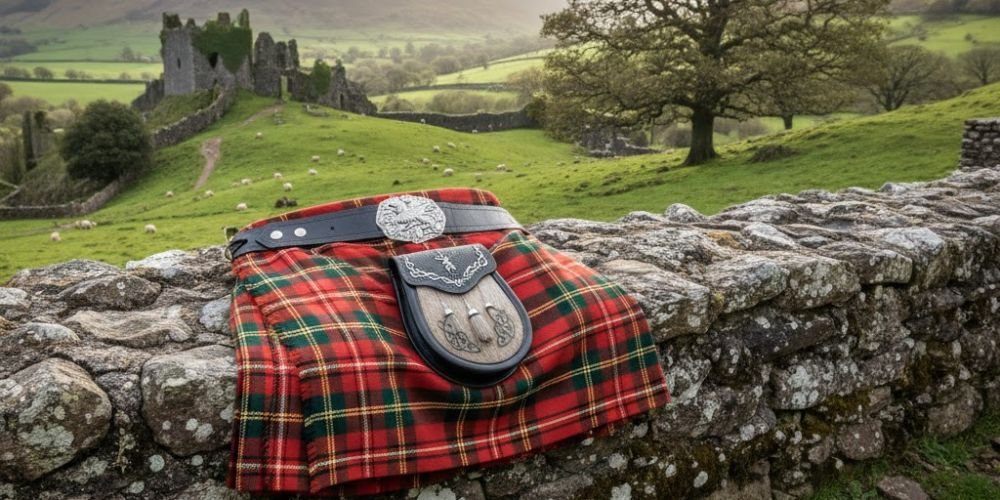
You’ve probably seen images of men in kilts and thought “Yes, Celtic = Scottish, Irish maybe Welsh too?” But the truth is more nuanced. The classic kilt goes back to the Scottish Highlands. The long “great kilt” appeared in the 1500s; the modern “small kilt” evolved by the 1700s.
Wales, however, had a very different clothing tradition. Historically, Welsh men did not wear kilts. Their garments were trousers, tunics, cloaks or other regional clothing and not what we now call a kilt for men.
That said: in the 21st‑century, a modern revival emerged. Welsh‑style kilts which are often spelled “cilts” (because there is no “k” in the Welsh alphabet) began to appear, featuring mens tartan kilts with Welsh patterns and Celtic motifs, as a way for Welsh people and diaspora to celebrate identity and heritage.
On Kilt And Kilts.com, we offer authentic Welsh tartans and hybrid kilts built for that modern Celtic pride but with clarity about their roots and meaning. This guide dives into the history, the revival, and what a “Welsh cilt” really means today.
Historical Origins of Welsh Kilts
The “great kilt” (full-length belted plaid) emerged in the Scottish Highlands by the 16th century; by the late 17th / early 18th century, the “small” tailored kilt developed.
In Wales, traditional clothing was very different. According to historians and cultural records, Welsh dress even back in the 18th and 19th centuries did not include pleated skirt-like garments for men. Instead, rural Welsh men wore trousers or working garments; and “national dress” for women (in 19th‑century revival efforts) included shawls, aprons, flannel skirts but not a kilt-style garment.
Some sources claim ancient Welsh tartan patterns or cloth did exist. Welsh woollen mills trace back centuries, producing flannels, checks and plaids. But even then, that cloth was used for shawls, blankets or garments and not kilts. Scholarly and expert consensus is that kilts, pleats and tartan‑skirts come from Scottish Highland tradition, not Welsh medieval or early-modern dress.
So if you are looking for centuries‑old tradition of Welsh men wearing kilts, there really is none. That clears up a lot of confusion many heritage‑seekers have.
Modern Welsh Tartans and the Rise of the “Cilt”
If Welsh kilts are not historical, where does the idea come from? The answer is revival, identity, and modern design. The first officially recognized Welsh tartans were registered around the year 2000.
These tartans tied to Welsh surnames, Welsh regions, or broad national identity were woven often by established Welsh mills such as the Cambrian Woollen Mill, which itself has roots in Welsh textile industry dating to the 19th century.
What this means for you: a “Welsh cilt” today is less about restoring some ancient garb, and more about embracing modern Celtic identity with respect for heritage. People wear these cilts at weddings, cultural events (like St. David’s Day), and festivals. Especially among the Welsh diaspora. Many choose tartan kilts for men with uniquely Welsh colors and family connections.
Contemporary Usage, Symbolism and Community Perspectives
Today, many Welsh people and Welsh‑heritage individuals around the world use cilts as a symbol of pride. Online retailers, cultural‑heritage shops, and weavers offer them as kilt for men options to people who want to celebrate Celtic roots without wearing Scottish tartan.
At the same time, there is frank debate. In a thread on Reddit (r/Wales), some users bluntly state: “Kilts come from the Highlands of Scotland… They have no connection with Wales.” Another writes, “All Welsh kilts and tartans were designed post turn of the millennium.”
Others are more supportive: some say they appreciate cilts as modern heritage wear, especially for events and diaspora gatherings. One comment recalled a Welsh man wearing a kilt at a wedding, another noted how “Welsh cilts” let them express identity without borrowing Scottish garments. Interest in tartan patterns continues to grow among younger generations seeking cultural connection.
That mix of skepticism and acceptance matters. It shows that if you choose to wear a cilt you should do so with awareness.
Embrace Welsh Cilt Pride With Clarity and Respect
Yes, Welsh people do wear kilts today. But these are not ancient garments passed down from medieval times.They are modern “cilts,” born from a revival of Welsh tartan patterns and a desire to express Celtic heritage and national pride.
If you resonate with that desire to show heritage, to connect with roots, to celebrate culture at a wedding or festival. A Welsh cilt can deliver meaning, style, and a confident sense of identity.
If you’re ready to honor your Welsh heritage the right way, browse our curated tartan kilts for men collection from kilts and kilts now and find your pattern of identity.